
English


QQ:1195537948
Tel:400-167-8986
Email:order@genenode.com
Web:www.genenode.com
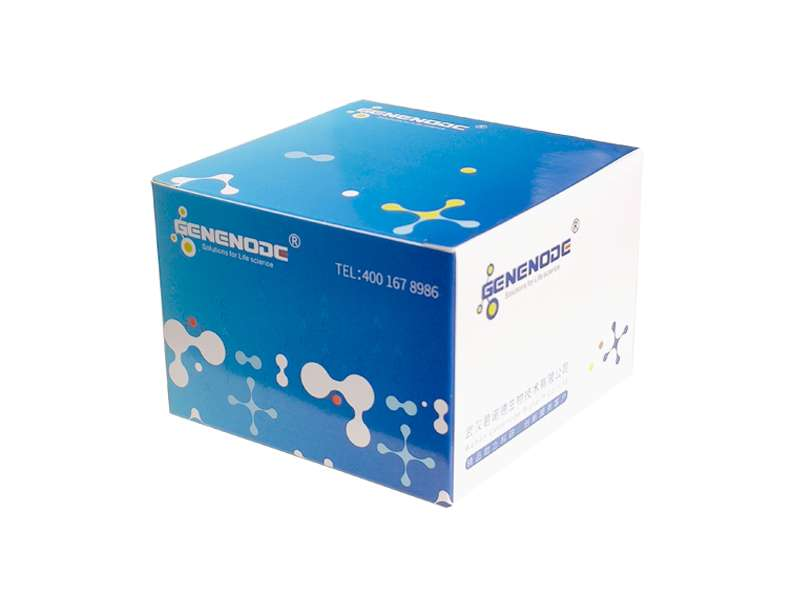
Yeast HighPure Plasmid Extraction Mini Kit(SpinColumn)
Number:P2204
Specifications:50T/50T
Price:350/550
Package:box
Storage:4℃
Yeast HighPure Plasmid Extraction Mini Kit(SpinColumn)(Without/With Lytic Enzyme)
Packing Specification:
| P2204N-50 | Yeast HighPure Plasmid Extraction Mini Kit(SpinColumn,Without Lytic Enzyme) | 50T | CNY350 |
| P2204-50 | Yeast HighPure Plasmid Extraction Mini Kit(SpinColumn,With Lytic Enzyme) | 50T | CNY550 |
Product Introduction:
This kit uses an improved SDS-alkaline lysis method combined with Lytic Enzyme for specific digestion of yeast cell walls, enabling the isolation of high-purity plasmid DNA from yeast cultures within 1 hour. After yeast collection, cell walls are removed by adding cell wall-breaking enzymes, followed by cell lysis via alkaline lysis. The silica matrix membrane in the spin column selectively binds plasmid DNA in the solution under high-salt and low-pH conditions. Impurities and other bacterial components are removed through deproteinization solution and wash buffer. Finally, pure plasmid DNA is eluted from the silica matrix membrane using low-salt and high-pH elution buffer.
Application Scope:
Suitable for isolating high-purity plasmid DNA from yeast cultures.
Operation Steps:
Tips:
Before first use, add the specified volume of absolute ethanol to the Wash Buffer WB bottle and Deproteinization Buffer PE bottle, mix thoroughly. Mark the corresponding box immediately after adding ethanol to avoid repeated additions!
Add all RNase A to Solution YP1, mix well, and store at 2-8℃ after each use.
Add 0.2% β-mercaptoethanol to the required volume of Sorbitol buffer and bring to room temperature for later use.
1.Take 1.5-5 mL of yeast culture (no more than 5×10⁷ cells), centrifuge at 9,000 rpm for 30 seconds, aspirate and discard the supernatant as much as possible, and collect the bacterial pellet.
For collecting more than 1.5 mL of bacterial culture: Centrifuge to discard the supernatant, add more bacterial culture to the same 1.5 mL tube, and repeat Step 1 until sufficient bacterial pellet is collected.
2.Add 300 μL of Sorbitol buffer, gently pipette to fully resuspend the cells; add 50 μL of Lytic Enzyme stock solution, invert thoroughly to mix, incubate at 37℃ for 1-3 hours to digest the cell wall, and invert several times during incubation to assist digestion.
If poor cell wall breaking leads to low plasmid yield: Increase the dosage of Lytic Enzyme to improve enzyme working concentration, extend digestion time, or increase temperature to 45℃. For yeasts not suitable for Lytic Enzyme digestion, other methods such as vortexing with 0.5 mm glass beads or repeated freeze-thaw can be used. Glass bead method: Add 250 μL of Solution YP1 (check if RNase A has been added) to the bacterial pellet to resuspend thoroughly, add 0.1 g of acid-washed glass beads (0.45-0.55 mm in diameter), vortex for 10 minutes, let stand for a few minutes to allow glass beads to settle, carefully aspirate the supernatant into a new tube, and proceed to Step 4.
3.Centrifuge at 13,000 rpm for 1 minute, aspirate and discard the supernatant as much as possible, add 250 μL of Solution YP1 to resuspend the bacterial pellet, vortex until completely suspended.
Undissolved bacterial clumps will affect lysis, leading to low yield and purity.
4.Add 250 μL of Solution YP2, gently invert up and down 4-7 times to fully lyse the bacteria, and incubate at room temperature for 4 minutes.
Mix gently; do not shake vigorously to avoid shearing genomic DNA! The incubation time should not exceed 5 minutes to prevent plasmid damage. The bacterial solution should become clear and viscous at this time. If there are few bacteria, proceed to the next step once it becomes clear and viscous; exact 5-minute incubation is not required.
5.Add 350 μL of Solution YP3, immediately invert up and down gently 4-7 times. White flocculent precipitation will form when fully mixed. Centrifuge at 13,000 rpm for 10 minutes, carefully transfer the supernatant.
Mix immediately after adding Solution YP3 to avoid local precipitation of SDS.
Pretreat the adsorption column with Equilibration Buffer
mandatory step; refer to "About the Use of Equilibration Buffer" above for specific methods.
6.Load the supernatant obtained in the previous step into the Spin EC Adsorption Column (placed in a collection tube), centrifuge at 12,000 rpm for 30-60 seconds, and discard the waste liquid in the collection tube.
7.Add 500 μL of Deproteinization Buffer PE (check if absolute ethanol has been added!). Centrifuge at 12,000 rpm for 30-60 seconds and discard the waste liquid.
8.Add 600 μL of Wash Buffer WB (check if absolute ethanol has been added!). Centrifuge at 12,000 rpm for 30-60 seconds and discard the waste liquid.
9.Add another 600 μL of Wash Buffer WB, centrifuge at 12,000 rpm for 30-60 seconds, and discard the waste liquid.
10.Place the Spin EC Adsorption Column back into the empty collection tube. Centrifuge at 13,000 rpm for 2 minutes to completely remove residual wash buffer (residual ethanol may inhibit downstream reactions).
Transfer the Spin EC Adsorption Column to a clean centrifuge tube. Add 50-100 μL of Elution Buffer EB (preheating the elution buffer in a 65-70℃ water bath can improve yield) to the center of the adsorption membrane. Incubate at room temperature for 2 minutes, then centrifuge at 13,000 rpm for 1 minute. For larger plasmid yield, reapply the eluate to the spin column and centrifuge for 1 minute.Higher elution volume leads to higher elution efficiency. To obtain higher plasmid concentration, the elution volume can be appropriately reduced, but the minimum volume should not be less than 50 μL (excessively small volume reduces plasmid elution efficiency and yield).


Official wechat
Contact number
18518676727
Instant messaging
QQ:800176181/1195537948
order@genenode.com
Address
C5-1, Zone C, Yangluo Port Huazhong International Industrial Park, No. 99, Yubo North Road, Yangtze River New Area, Wuhan City, Hubei Province
Beijing Genenode Biotech Co.,Ltd all right reserved