
English


QQ:1195537948
Tel:400-167-8986
Email:order@genenode.com
Web:www.genenode.com
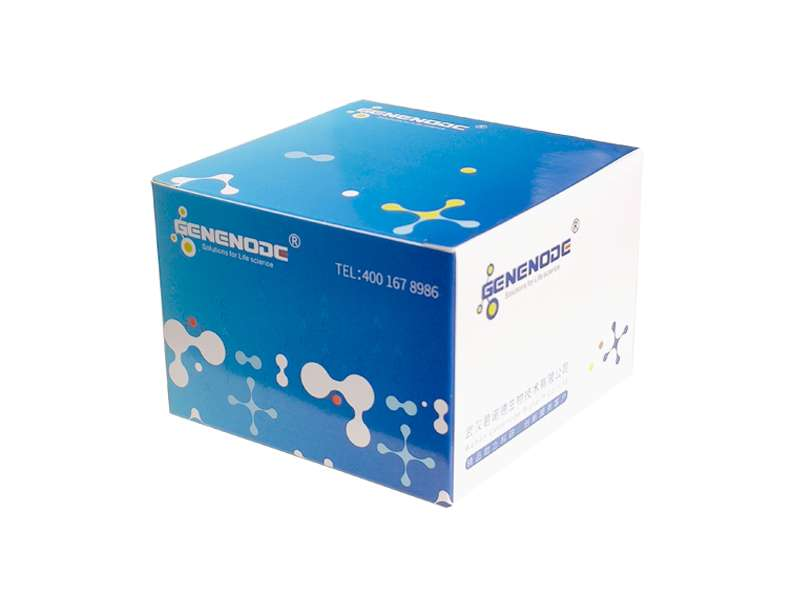
Endo-Free Plasmid Isolation Midi Kit(Solution)
Number:P2205
Specifications:20T/40T
Price:760/1360
Package:box
Storage:4℃
Endo-Free Plasmid Isolation Midi Kit(Solution)
Packing Specification:
| P2205-20 | Endo-Free Plasmid Isolation Midi Kit(Solution) | 20T | CNY760 |
| P2205-40 | Endo-Free Plasmid Isolation Midi Kit(Solution) | 40T | CNY1360 |
Product Introduction:
This kit extracts plasmid DNA from cultured bacteria using the alkaline lysis method. With a unique solution formulation and endotoxin removal reagent, high-quality plasmid DNA is obtained by removing impurities such as proteins, polysaccharides, endotoxins, and RNA through only a few simple centrifugation steps. The OD260/280 ratio of the purified DNA is usually around 1.8. The obtained plasmid can be directly used in applications requiring high DNA purity, such as cell transfection and even in vivo animal experiments. The later purification process is performed in 1.5 mL microcentrifuge tubes, with a simple method that requires no special equipment, no column passing, and no phenol-chloroform extraction. It can basically fully recover the plasmid released by bacterial lysis, without worrying about plasmid DNA loss. This method causes little damage to the plasmid during extraction and purification. Even for large plasmids of 10 kb or even over 100 kb, or extra-large BAC/PAC plasmids, as long as they can be extracted by the alkaline lysis method, they can be effectively purified. The plasmid can be dissolved in any small volume, with a concentration up to 5 μg/μL. The supercoiled ratio can be as high as 95%, with no endotoxins and excellent transfection efficiency.
Application Scope:
Suitable for extracting plasmid DNA from cultured bacteria.
Product Features:
1.Eliminates the need for toxic reagents such as phenol and chloroform, as well as ethanol precipitation. Rapid and convenient: 150 μg - 600 μg of pure high-copy plasmid DNA can be quickly extracted from 50-70 mL of E. coli LB (Luria-Bertani) culture, with an extraction rate of 80-90%.
2.The obtained plasmid has high yield, high concentration, high supercoiled ratio, and good purity. It can be directly used for various molecular biology experiments such as restriction digestion, transformation, PCR, in vitro transcription, and sequencing.
Extremely low endotoxin content (< 0.1 EU/μg DNA), which can be directly used for cell transfection.
Operation Steps:
Add all RNase A to Solution P1, mix well, and store at 2-8℃ after each use.
1.Take 40-60 mL of overnight bacterial culture (maximum 90 mL), transfer to a 50 mL centrifuge tube, centrifuge at 4,500~6,000 x g at 4℃ for 5 minutes to pellet the bacteria (or centrifuge at 12,000 x g for 2 minutes), and discard the supernatant completely.
2.Add 2.5 mL of Solution P1, thoroughly suspend and vortex the bacterial pellet to disperse it completely without clumps. Incubate at room temperature for 3~5 minutes.
Undissolved bacterial clumps will affect lysis, leading to low yield and purity.
3.Add 2.5 mL of Solution P2, gently invert the centrifuge tube 6~8 times, incubate at room temperature for 5 minutes to fully lyse the bacteria until the solution becomes transparent.
Mix gently; do not shake vigorously to avoid shearing genomic DNA! The incubation time should not exceed 5 minutes to prevent plasmid damage. The bacterial solution should become clear and viscous at this time. If there are few bacteria, proceed to the next step once it becomes clear and viscous; exact 5-minute incubation is not required. If the solution does not become clear, it may be due to excessive bacterial biomass and incomplete lysis; reduce the bacterial amount accordingly.
4.Add 2.5 mL of Solution PⅢ, immediately invert the centrifuge tube 6~8 times to mix thoroughly until white flocculent precipitation forms. Centrifuge the lysate at 12,000~16,000 x g at 4℃ for 10~15 minutes, carefully aspirate the supernatant, and transfer to a new 50 mL centrifuge tube.
Mix immediately after adding Solution PⅢ to avoid local precipitation of SDS.
Note: When using isopropanol for precipitation, fewer protein impurities and salt ions co-precipitate, so no obvious large clumps of precipitation may be visible. However, the plasmid can still be completely precipitated without affecting the actual plasmid yield. If you are accustomed to operating with visible large precipitation clumps, 2 volumes of absolute ethanol can be used for precipitation.
5.Add 5 mL of isopropanol, invert the centrifuge tube to mix thoroughly.
6.Centrifuge at 12,000~16,000 x g at 4℃ for 10 minutes, carefully discard the supernatant, invert on absorbent paper to gently drain residual liquid. Add 3-5 mL of 70% ethanol for rinsing, centrifuge at maximum speed for 5 minutes, discard the supernatant, and air-dry the precipitate.
Note: If the DNA precipitate is over-dried, it will not dissolve completely. However, if too much ethanol remains unvolatilized, it will also cause incomplete DNA dissolution.
Note: After centrifugation and precipitation with isopropanol, the high-purity plasmid adsorbed on the tube bottom and side wall may not be visible, but this does not affect the yield. In subsequent steps, carefully pipette the tube bottom and the side wall where the precipitate is located to rinse and dissolve the plasmid.
7.Add 0.7 mL of Solution P1 to completely dissolve the precipitate. Note that even if the plasmid precipitate attached to the tube bottom and side wall is not visible, pipette the tube bottom and the side wall where the precipitate is located to rinse it off (for large plasmids, a wide-mouth pipette can be used for gentle pipetting to assist dissolution). Then transfer the plasmid solution to a new 1.5 mL centrifuge tube.
Optional Step (generally not required): If the strain is rich in RNA with trace RNA residues, incubate the plasmid solution at 60℃ for 15 minutes to digest the RNA after this step.
8.Add 55 μL of Impurity Remover A, invert to mix thoroughly. Then add approximately 0.1 volumes (about 80 μL) of ice-precooled Endotoxin Remover, invert and rotate 7-10 times (for about 30 seconds) to mix thoroughly, place on ice for ≥5 minutes, and invert to mix occasionally.
The supernatant will become turbid after adding Endotoxin Remover, but should clear after ice incubation.
Note: If endotoxin removal for transfection is not required, only add 55 μL of Impurity Remover A at this step, mix thoroughly, place on ice for 5 minutes, centrifuge, carefully transfer the supernatant to a new tube, and proceed directly to Step 11.
9.Incubate in a 42℃ water bath; the solution will become turbid again. Invert to mix and incubate at 42℃ for 5 minutes.
10.Centrifuge at 14,000 x g at room temperature for 5 minutes to separate phases (at low temperatures, Endotoxin Remover cannot separate phases, so centrifugation must be performed at room temperature of at least 20℃ or ensure the rotor temperature is above 20℃ in winter). The upper aqueous phase contains DNA, and the lower blue oily phase contains endotoxins and other impurities. Transfer the upper aqueous phase containing DNA to a new tube (being careful not to aspirate the blue oily layer, which contains endotoxins and other impurities) and discard the oily layer.
The solution must separate into two phases; if not, repeat Steps 9-10.
11.Add an equal volume of Impurity Remover B (about 750 μL) to the upper aqueous phase obtained in the previous step, mix gently, centrifuge at 14,000 x g at 4℃ for 10 minutes, discard the supernatant (being careful not to lose DNA). Gently add 1 mL of 70% ethanol for washing, centrifuge to discard the supernatant, repeat twice. Invert and air-dry at room temperature for 5~10 minutes to allow complete ethanol volatilization.
12.Add an appropriate amount of TE or pure water (50~100 μL) to dissolve the precipitate (oscillation in a 37℃ water bath can assist dissolution). Note that a lot of plasmid DNA may adhere to the centrifuge tube wall; even if not visible, fully pipette the wall to dissolve and recover the plasmid DNA.
Finally, the precipitate can be dissolved in any small volume as needed to obtain high-concentration transfection-grade plasmid DNA (up to 5-10 μg/μL). If required, customers can also choose a larger volume for dissolution.


Official wechat
Contact number
18518676727
Instant messaging
QQ:800176181/1195537948
order@genenode.com
Address
C5-1, Zone C, Yangluo Port Huazhong International Industrial Park, No. 99, Yubo North Road, Yangtze River New Area, Wuhan City, Hubei Province
Beijing Genenode Biotech Co.,Ltd all right reserved