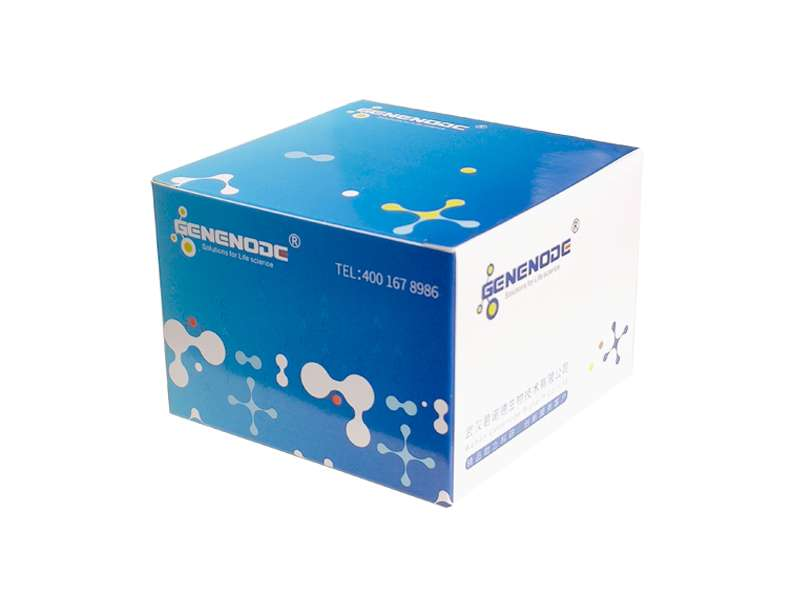
Tissue/Cell RNA Extraction Kit with gDNA Eraser(SpinColumn)
Packing Specification:
|
R2104
|
Tissue/Cell RNA Extraction Kit with gDNA Eraser(SpinColumn)
|
20T
|
CNY670
|
|
R2104
|
Tissue/Cell RNA Extraction Kit with gDNA Eraser(SpinColumn)
|
50T
|
CNY1200
|
|
R2104
|
Tissue/Cell RNA Extraction Kit with gDNA Eraser(SpinColumn)
|
200T
|
CNY4320
|
|
RP2104
|
Tissue/Cell RNA Extraction Kit with DNase I(SpinColumn)
|
20T
|
CNY720
|
|
RP2104
|
Tissue/Cell RNA Extraction Kit with DNase I(SpinColumn)
|
50T
|
CNY1290
|
|
RP2104
|
Tissue/Cell RNA Extraction Kit with DNase I(SpinColumn)
|
200T
|
CNY4640
|
For research use only. Not for use in medicine, clinical diagnosis, food, cosmetics or other applications.
Product Introduction:
Building on our phenol- and chloroform-free rapid RNA extraction technology, we have developed a genomic DNA (gDNA) removal column technology that effectively eliminates gDNA residues. The extracted RNA requires no DNase digestion and can be directly used in experiments such as PCR and quantitative real-time PCR (qPCR). The unique lysis buffer rapidly lyses cells and inactivates cellular RNases. The lysate mixture is then passed through a genomic DNA removal column, where gDNA is retained while RNA is filtered through. After adjusting the binding conditions of the filtered RNA with ethanol, RNA selectively adsorbs to the silica matrix membrane inside the spin column under high chaotropic salt conditions. Through a series of rapid washing-centrifugation steps, the deproteinization buffer and wash buffer remove impurities such as cellular metabolites and proteins. Finally, pure RNA is eluted from the silica matrix membrane with low-salt RNase-free H2O.
Product Features:
1.The silica matrix membrane inside the spin adsorption column is made of high-quality specially modified adsorption membrane, ensuring minimal variation in adsorption capacity between columns.
2.No toxic reagents such as phenol or chloroform are required, and steps like ethanol precipitation are eliminated.
3.Fast and simple operation; the entire process for a single sample can usually be completed within 30 minutes.
4.Genomic DNA removal column technology effectively eliminates gDNA residues. The extracted RNA requires no DNase digestion and can be directly used in experiments such as PCR and qPCR.
5.Multiple column washing steps ensure high purity, with a typical OD260/OD280 ratio of 2.1-2.2 (the ratio of 100% pure RNA is generally around 2.2).
Operation Steps:
Note: Before first use, add the specified volume of anhydrous ethanol to the 70% ethanol bottle and Wash Buffer RW bottle, mix thoroughly. Immediately mark the corresponding box after addition to avoid repeated addition!
1.Cultured Cells
a.Collect <107 suspension cells into a 1.5 mL centrifuge tube. For adherent cells: lyse directly in culture plates; for cells in culture flasks, digest with trypsin first, pipette to detach, and collect.
b.Centrifuge at 13,000 rpm for 10 seconds (or 300×g for 5 minutes) to pellet the cells. Completely aspirate and discard the supernatant, leaving the cell pellet. Note: Incomplete removal of the supernatant will dilute the lysis buffer, leading to reduced yield and purity.
c.Flick the tube wall to fully resuspend the cell pellet. Add 350 μL of Lysis Buffer RLT Plus for <5×10⁶ cells or 600 μL for 5×10⁶-1×10⁷ cells, mix by pipetting, and vortex vigorously by hand for 20 seconds to ensure complete lysis.
d.Homogenization: (Not required for very small cell amounts <1×10⁵; vortex for 1 minute instead). Shear the lysate vigorously more than 10 times with a disposable 1 mL syringe equipped with a blunt 0.9 mm needle (or homogenize electrically for 30 seconds) to shear DNA, reduce viscosity (to prevent column clogging), and improve yield.
e.Transfer the entire lysate or homogenized mixture to a gDNA Removal Column (place the column into a collection tube).
f.Proceed immediately to Step 3 in the "General Extraction Steps" below.
2.Animal Tissues (e.g., Mouse Liver, Brain)
a.Electrical Homogenization:Quickly cut fresh tissue into small pieces with a scalpel. Add 350 μL of Lysis Buffer RLT Plus for <20 mg tissue or 600 μL for 20-30 mg tissue, then homogenize thoroughly electrically for 20-40 seconds.
b.Liquid Nitrogen Grinding + Homogenization:Grind the tissue into fine powder in liquid nitrogen. Transfer an appropriate amount of tissue powder (20 mg/30 mg) into a 1.5 mL centrifuge tube containing 350 μL/600 μL of Lysis Buffer RLT Plus, vortex vigorously by hand for 20 seconds to ensure complete lysis.Shear the lysate vigorously 10 times with a disposable 1 mL syringe equipped with a blunt 0.9 mm needle (or homogenize electrically for 30 seconds) to shear DNA, reduce viscosity (to prevent column clogging), and improve yield.
c.Centrifuge the homogenized lysate at 13,000 rpm for 3 minutes to pellet any difficult-to-lyse debris or insoluble substances. Transfer the entire lysate supernatant to a gDNA Removal Column (place the column into a collection tube).
d.Proceed immediately to Step 3 in the "General Extraction Steps" below.
3.Centrifuge at 13,000 rpm for 60 seconds immediately and retain the filtrate (RNA is in the filtrate).
Ensure all liquid has passed through the membrane after centrifugation with no residue left on the membrane. If necessary, increase the centrifugal force and time.
4.Accurately estimate the volume of the filtrate with a micropipette (usually 350 μL/600 μL; subtract any volume lost during filtration). Add an equal volume of 70% ethanol (please check if anhydrous ethanol has been added first!). Precipitation may occur at this point, but it will not affect the extraction process. Mix immediately by pipetting; do not centrifuge.
5.Immediately transfer the mixture (≤700 μL per load; can be added in two batches) into an Adsorption Column SpinRA (place the adsorption column into a collection tube). Centrifuge at 13,000 rpm for 30 seconds and discard the waste liquid.
6.Add 700 μL of Deproteinization Buffer RW1, incubate at room temperature for 1 minute, centrifuge at 12,000 rpm for 30 seconds, and discard the waste liquid.
7.Add 500 μL of Wash Buffer RW (please check if anhydrous ethanol has been added first!), centrifuge at 12,000 rpm for 30 seconds, and discard the waste liquid. Repeat this step with another 500 μL of Wash Buffer RW.
8.Place the Adsorption Column SpinRA back into the empty collection tube and centrifuge at 13,000 rpm for 2 minutes to remove residual wash buffer as much as possible, as residual ethanol in the wash buffer may inhibit downstream reactions.
9.Remove the Adsorption Column SpinRA and place it into an RNase-free centrifuge tube. According to the expected RNA yield, add 30-50 μL of RNase-free water (preheating in a 70-90℃ water bath in advance can improve yield) to the center of the adsorption membrane. Incubate at room temperature for 1 minute, then centrifuge at 12,000 rpm for 1 minute.
10.If the expected RNA yield is >30 μg, repeat Step 8 with 30-50 μL of RNase-free water and combine the two eluates. Alternatively, add the first eluate back to the adsorption column and repeat Step 8 once (if a higher RNA concentration is required).
Note: Eluting twice yields RNA with a higher concentration. Combining eluates from two separate elutions results in a 15-30% higher RNA yield but a lower concentration. Users can choose according to their needs.