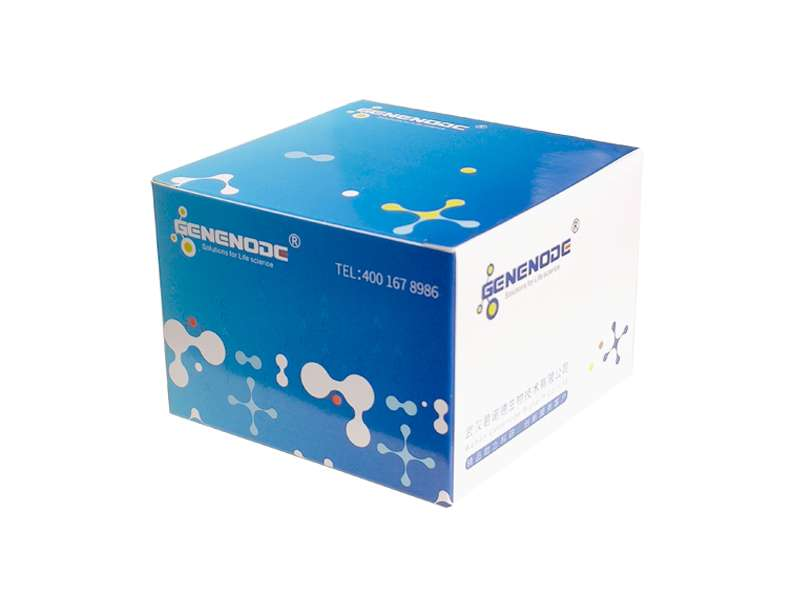
Fresh Blood Cell Total RNA Extraction Kit(SpinColumn)
Packing Specification:
|
R2109-20
|
Fresh Blood Cell Total RNA Extraction Kit(SpinColumn)
|
20T
|
CNY440
|
|
R2109-50
|
Fresh Blood Cell Total RNA Extraction Kit(SpinColumn)
|
50T
|
CNY800
|
|
R2109-200
|
Fresh Blood Cell Total RNA Extraction Kit(SpinColumn)
|
200T
|
CNY2880
|
For research use only. Not for use in medicine, clinical diagnosis, food, cosmetics or other applications.
Product Introduction:
This kit adopts an improved guanidinium isothiocyanate/phenol one-step method to lyse cells and inactivate RNases. Total RNA then selectively binds to the silica matrix membrane inside the spin column under high chaotropic salt conditions. Through a series of rapid washing-centrifugation steps, deproteinization buffer and washing buffer remove impurities such as cellular metabolites and proteins. Finally, pure RNA is eluted from the silica matrix membrane using low-salt RNase-free water.
Product Features:
1.The silica matrix membranes in the spin columns are all high-quality specially modified membranes, ensuring minimal variation in adsorption capacity between columns.
2.Combines the advantages of guanidinium isothiocyanate/phenol one-step reagents (excellent stability and high purity) and spin columns (convenience and speed). No isopropanol precipitation or ethanol washing steps are required; RNA can be directly eluted from the spin column, avoiding the problem of difficulty in dissolving due to over-drying.
3.The unique formulation of RL Lysis Buffer effectively eliminates genomic DNA contamination.
4.Fast and simple operation; a single sample can be processed within 30 minutes.
5.Multiple column washing steps ensure high purity, with a typical OD260/OD280 ratio of 2.1-2.2 (the ratio of 100% pure RNA is generally around 2.2).
Operation Steps:
Tips:
Before first use, add the specified volume of anhydrous ethanol to the 70% ethanol bottle and Washing Buffer RW bottle, mix thoroughly. Immediately mark the corresponding checkbox after adding ethanol to avoid repeated addition!
Dilute the 10× Red Blood Cell Lysis Buffer (Buffer RLB) to 1× with DEPC-treated water before use.
1.Add 1 volume (0.5-1.0 mL) of fresh blood with various anticoagulants (after inversion to mix) and 3 volumes of 10× Red Blood Cell Lysis Buffer (Buffer RLB) to an RNase-free centrifuge tube of appropriate size. Invert to mix, and gently flick the tube wall to ensure thorough mixing. The number of white blood cells in patient blood samples may increase or decrease significantly, so the sample volume should be adjusted accordingly.
2.Incubate at room temperature for 10 minutes (invert and gently flick the tube several times during incubation to assist red blood cell lysis). If RNA degradation is severe, lysis can be performed on ice, but the time should be extended to ensure complete lysis.
3.Centrifuge at 12,000 rpm for 20 seconds. Pour off the red supernatant and carefully aspirate as much supernatant as possible (being careful not to aspirate the cell pellet at the bottom of the tube), leaving an intact white blood cell pellet at the bottom.
After centrifugation, a white white blood cell pellet should be visible at the bottom of the tube. There may be some red blood cell debris mixed with the white blood cell pellet, but if a mostly red cell pellet is observed, it indicates incomplete red blood cell lysis. Add more Red Blood Cell Lysis Buffer to resuspend the cell pellet and repeat Steps 2 and 3. Aspirate as much supernatant as possible; excessive residual supernatant will dilute the lysis buffer, causing abnormal lysis and binding, and reducing yield and purity.
4.Vortex or gently flick the tube wall to fully resuspend the white blood cell pellet. Add 1 mL of 1× Lysis Buffer RL and repeatedly pipette to lyse the cells.
5.Vigorously vortex the homogenized sample to mix well, and incubate at 15-30°C for 5 minutes to fully dissociate ribosomes.
6.Add 0.2 mL chloroform to 1 mL Lysis Buffer RL. Tighten the sample tube cap, vortex vigorously for 15 seconds, and incubate at room temperature for 2 minutes.
7.Centrifuge at 12,000 rpm for 10 minutes at 4°C. The sample will separate into three layers: the lower organic phase, the interphase, and the upper colorless aqueous phase. RNA is present in the aqueous phase. The volume of the aqueous phase is approximately 60% of the added RL volume. Transfer the aqueous phase to a new tube and proceed to the next step.
8.Add an equal volume of 70% ethanol (please check if anhydrous ethanol has been added first!), invert to mix (precipitation may form at this step). Transfer the resulting solution and any precipitate to a SpinRA RNA Spin Column (place the column in a collection tube). If the entire solution and mixture cannot be added to the SpinRA RNA Spin Column at one time, transfer in two batches.
9.Centrifuge at 12,000 rpm for 45 seconds, discard the waste liquid, and place the spin column back into the collection tube.
10.Add 500 μL of Deproteinization Buffer RE, centrifuge at 12,000 rpm for 45 seconds, and discard the waste liquid.
11.Add 500 μL of Washing Buffer RW (please check if anhydrous ethanol has been added first!), centrifuge at 12,000 rpm for 45 seconds, and discard the waste liquid.
12.Add another 500 μL of Washing Buffer RW, centrifuge at 12,000 rpm for 45 seconds, and discard the waste liquid.
13.Place the SpinRA RNA Spin Column back into an empty collection tube, centrifuge at 13,000 rpm for 2 minutes to thoroughly remove residual washing buffer, as ethanol residues in the washing buffer may inhibit downstream reactions.
14.Remove the SpinRA RNA Spin Column and place it into an RNase-free centrifuge tube. Add 50-80 μL of RNase-free water to the center of the adsorption membrane (preheating the water in a 65-70℃ water bath in advance yields better results) based on the expected RNA yield. Incubate at room temperature for 2 minutes, then centrifuge at 12,000 rpm for 1 minute. For higher RNA yield, load the obtained solution back into the spin column and centrifuge for 1 minute, or add an additional 30 μL of RNase-free water, centrifuge for 1 minute, and combine the two eluates.
Larger elution volume results in higher elution efficiency. If higher RNA concentration is required, the elution volume can be appropriately reduced, but the minimum volume should be no less than 30 μL. Excessively small volume reduces RNA elution efficiency and yield.