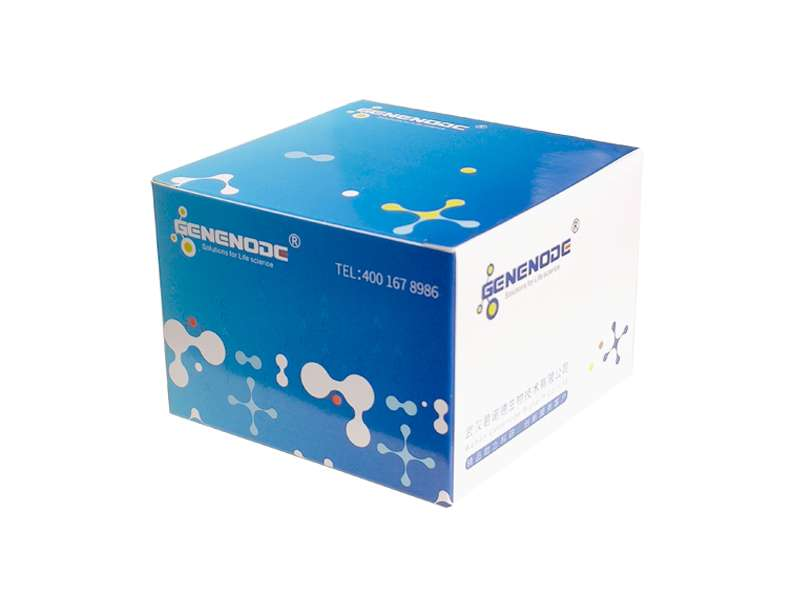
Fresh Blood RNA Extraction Kit(SpinColumn)
Packing Specification:
|
R2110-20
|
Fresh Blood RNA Extraction Kit(SpinColumn)
|
20T
|
CNY650
|
|
R2110-50
|
Fresh Blood RNA Extraction Kit(SpinColumn)
|
50T
|
CNY1170
|
|
R2110-200
|
Fresh Blood RNA Extraction Kit(SpinColumn)
|
200T
|
CNY4210
|
For research use only. Not for use in medicine, clinical diagnosis, food, cosmetics or other applications.
Product Introduction:
Red Blood Cell Lysis Buffer selectively lyses red blood cells. Subsequently, the unique Lysis Buffer/β-mercaptoethanol rapidly lyses white blood cells and inactivates cellular RNases. After adjusting the binding conditions with ethanol, RNA selectively binds to the silica matrix membrane inside the spin column under high chaotropic salt conditions. Through a series of rapid washing-centrifugation steps, deproteinization buffer and washing buffer remove impurities such as cellular metabolites and proteins. Finally, pure RNA is eluted from the silica matrix membrane using low-salt RNase-free H2O.
Product Features:
1.No toxic reagents such as phenol/chloroform are required, and ethanol precipitation steps are eliminated.
2.The repeatedly optimized formulation of Red Blood Cell Lysis Buffer ensures rapid and complete lysis.
3.Fast and simple operation; a single sample can be processed within 40 minutes.
4.Multiple column washing steps ensure high purity, with a typical OD260/OD280 ratio of 1.9~2.1 and minimal DNA residues. Suitable for RT-PCR, Northern blot, and various other experiments.
Operation Steps:
Tips:
Before first use, add the specified volume of anhydrous ethanol to the Washing Buffer RW bottle and 70% ethanol bottle!
Dilute the 10× Red Blood Cell Lysis Buffer RLB to 1× with DEPC-treated water before use.
Add β-mercaptoethanol to Lysis Buffer RLT to a final concentration of 1% before operation. For example: add 10 μL β-mercaptoethanol to 1 mL RLT. This lysis buffer is best prepared fresh and can be stored at 4℃ for one month after preparation.
1.Add 1 volume (<1.5 mL) of EDTA-anticoagulated fresh blood (after inversion to mix) and 3 volumes of Red Blood Cell Lysis Buffer RLB to an RNase-free centrifuge tube of appropriate size. Invert to mix, and gently flick the tube wall to ensure thorough mixing.
2.Incubate at room temperature for 10 minutes (invert and gently flick the tube several times during incubation to assist red blood cell lysis). If RNA degradation is severe, lysis can be performed on ice, but the time should be extended to ensure complete lysis.
3.Centrifuge at 12,000 rpm for 20 seconds. Pour off the red supernatant and carefully aspirate as much supernatant as possible (being careful not to aspirate the cell pellet at the bottom of the tube), leaving an intact white blood cell pellet at the bottom.
After centrifugation, a white white blood cell pellet should be visible at the bottom of the tube. There may be some red blood cell debris mixed with the white blood cell pellet, but if a mostly red cell pellet is observed, it indicates incomplete red blood cell lysis. Add more Red Blood Cell Lysis Buffer to resuspend the cell pellet and repeat Steps 2 and 3. Aspirate as much supernatant as possible; excessive residual supernatant will dilute the lysis buffer, causing abnormal lysis and binding, and reducing yield and purity.
4.Vortex or gently flick the tube wall to fully resuspend the white blood cell pellet. Add 350 μL (<0.5 mL whole blood) or 600 μL (0.5-1.5 mL whole blood) of Lysis Buffer RLT, pipette to mix, then vigorously vortex by hand for 20 seconds to fully lyse the cells. The normal white blood cell count in patient blood samples is 4000-7000/μL. If the white blood cell count in the blood sample is significantly increased, the sample volume should be appropriately reduced. Alternatively, add RLT in a ratio of 350 μL (<2×10⁶ white blood cells) or 600 μL (2×10⁶-1×10⁷ white blood cells).
5.Pipette to mix for lysis or vortex vigorously until satisfactory homogenization is achieved (or homogenize electrically for 30 seconds) to shear DNA, reduce viscosity, and improve yield.
6.Accurately estimate the volume of the lysate, add an equal volume of 70% ethanol (please check if anhydrous ethanol has been added first!). Precipitation may form at this step but will not affect the extraction process. Immediately pipette to mix; do not centrifuge.
7.Immediately load the mixture (≤700 μL per load; load in two batches if the volume exceeds 700 μL) into a SpinRA RNA Spin Column (place the column in a collection tube). Centrifuge at 13,000 rpm for 60 seconds and discard the waste liquid.
8.Add 700 μL of Deproteinization Buffer RW1, incubate at room temperature for 1 minute, centrifuge at 12,000 rpm for 30 seconds, and discard the waste liquid.
9.Add 500 μL of Washing Buffer RW (please check if anhydrous ethanol has been added first!), centrifuge at 12,000 rpm for 30 seconds, and discard the waste liquid. Repeat this step with another 500 μL of Washing Buffer RW.
10.Place the SpinRA RNA Spin Column back into an empty collection tube, centrifuge at 13,000 rpm for 2 minutes to thoroughly remove residual washing buffer, as ethanol residues in the washing buffer may inhibit downstream reactions.
11.Remove the SpinRA RNA Spin Column and place it into an RNase-free centrifuge tube. Add 30-50 μL of RNase-free water to the center of the adsorption membrane (preheating the water in a 70-80℃ water bath in advance yields better results) based on the expected RNA yield. Incubate at room temperature for 1 minute, then centrifuge at 12,000 rpm for 1 minute.
12.If extracting from >0.5 mL whole blood or >2×10⁶ white blood cells, repeat Step 11 with 30-50 μL of RNase-free water to obtain more RNA. Alternatively, reuse the first eluate by adding it back to the spin column and repeating Step 11 (for higher RNA concentration).
Eluting twice yields RNA with higher concentration. Combining eluates from two separate elutions results in 15-30% higher RNA yield but lower concentration. Choose the method based on experimental needs.