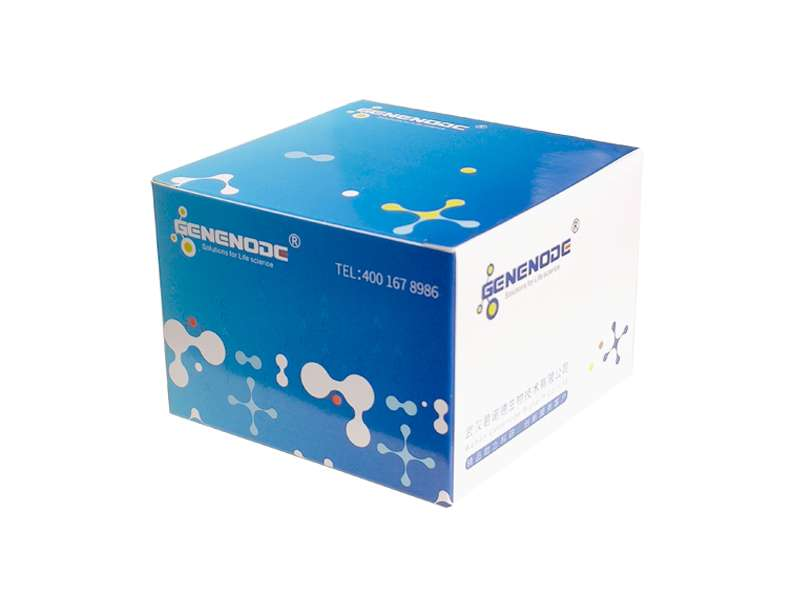
PAXgene Blood RNA Kit(SpinColumn)
Packing Specification:
|
R2112-50
|
PAXgene Blood RNA Kit(SpinColumn)
|
50T
|
CNY2700
|
|
R2112-200
|
PAXgene Blood RNA Kit(SpinColumn)
|
200T
|
CNY10260
|
For research use only. Not for use in medicine, clinical diagnosis, food, cosmetics or other applications.
Product Introduction:
This kit is used for the isolation and purification of intracellular RNA from whole blood stabilized in PAXgene Blood RNA Tubes, without the need for harmful components such as Trizol LS or phenol-chloroform. After blood collection, PAXgene Blood RNA Tubes can stabilize the sample for up to 3 days at 18–25°C, and for at least 60 months at –20°C or –70°C.
The PAXgene Blood RNA system includes PAXgene Blood RNA Tubes (provided by BD, Catalog No.: 762165) for blood collection, stabilization, and transportation, as well as the PAXgene Blood RNA Kit for isolation and purification based on silica membrane technology and spin column method. Purification can be performed manually using a centrifuge or automatically on the QIAcube Fully Automated Nucleic Acid Purification System. This product delivers excellent performance, ensuring highly reliable RNA purification.
Application Scope:
Designed for use with PAXgene Blood RNA Tubes, for the isolation and purification of intracellular RNA from whole blood stored in the tubes.
Experimental Procedures:
Pre-Experiment Preparation
1.Preheat the incubator or water bath to 55°C in advance.
2.Ensure that the PAXgene Blood RNA Tube (BRT) is completely thawed. Thaw at room temperature or in a 25°C water bath for 30-60 minutes, gently inverting and mixing multiple times during the process until the blood is fully dissolved.
3.Prepare the DNase I digestion reaction mixture in advance. Configure the system according to the number of samples in the following ratio:
|
Buffer
|
Volume per Prep
|
10 Preps
|
|
DNase I Buffer
|
90 μL
|
900 μL
|
|
RNase-free DNase I
|
10 μL
|
100 μL
|
|
Total volume
|
100 μL
|
1000 μL
|
Precautions: DNase I is highly sensitive and prone to physical denaturation. Do not vortex vigorously; gently invert to mix thoroughly.
Experimental Procedures (10 mL Starting Volume)
1.Centrifuge the PAXgene Blood RNA Tube (BRT) at 3,000-5,000 x g for 10 minutes using a swing-bucket rotor centrifuge. The PAXgene Blood RNA Tube (BRT) may break if other types of rotors are used.
2.Aspirate and discard the supernatant. If pouring out the supernatant, operate carefully to avoid discarding the cell pellet at the bottom, and blot the residual whole blood lysate at the tube mouth with clean absorbent paper.
3.Add 4 mL of RNase-free water and vortex to fully resuspend the cell pellet.
4.Centrifuge again at 3,000-5,000 x g for 10 minutes using a swing-bucket rotor centrifuge. Carefully discard the supernatant (either by pouring or aspiration). Incomplete removal of the supernatant will inhibit lysis and dilute the lysate, thereby affecting the conditions for RNA binding to the membrane.
5.Add 350 μL of Resuspension Buffer (BR1), pipette and mix the cell pellet at the bottom of the tube with a 1 mL blue pipette tip, then vortex to fully resuspend the cell pellet.
6.Transfer the sample to a new 1.5 mL microcentrifuge tube, add 300 μL of Binding Buffer (BR2) and 40 μL of Proteinase K (PK) solution, and vortex for 5 seconds to mix thoroughly.
7.Incubate in an orbital shaker incubator at 55-60°C with shaking at 400~1,400 rpm for 10-12 minutes. If no orbital shaker incubator is available, gently invert and mix the microcentrifuge tube 2-3 times during incubation.
8.Aspirate the entire lysate (approximately 700 μL) and add it to the Shredder Spin Column (yellow gasket). Centrifuge at 13,000 rpm for 2 minutes. After centrifugation, RNA is present in the filtrate of the collection tube.
9.Carefully aspirate the supernatant at the bottom of the collection tube, avoiding the pellet. Transfer the filtrate from the collection tube to a new 1.5 mL microcentrifuge tube, add 0.5 volumes (approximately 350 μL) of absolute ethanol, and gently vortex to mix thoroughly.
10.Aspirate 700 μL of the sample and add it to the RNA Spin Column (white gasket). Centrifuge at 13,000 rpm for 1 minute and discard the waste liquid.
11.Transfer the remaining sample to the same RNA Spin Column (white gasket). Centrifuge at 13,000 rpm for 1 minute and discard the waste liquid.
12.Add 350 μL of Buffer RW1 (BR3). Centrifuge at 13,000 rpm for 1 minute and discard the waste liquid.
13.Add 100 μL of the pre-prepared DNase I digestion working solution to the center of the adsorption membrane. Incubate at room temperature for 15 minutes.
14.Add 350 μL of Buffer RW1 (BR3). Centrifuge at 13,000 rpm for 1 minute and discard the waste liquid.
15.Add 500 μL of Wash Buffer RW (BR4). Centrifuge at 13,000 rpm for 1 minute and discard the waste liquid.
16.Add another 500 μL of Wash Buffer RW (BR4). Centrifuge at 13,000 rpm for 1 minute and discard the waste liquid.
17.Place the RNA Spin Column back into the empty collection tube. Centrifuge at 13,000 rpm for 2 minutes to remove as much of the wash buffer as possible, avoiding residual ethanol in the wash buffer that may inhibit downstream reactions.
18.Remove the RNA Spin Column and place it into a new RNase-free microcentrifuge tube. According to the expected RNA yield, add 40-50 μL of RNFW (RNase-free H₂O) to the center of the adsorption membrane (heating the RNase-free H₂O in a 70-90°C water bath can improve yield). Incubate at room temperature for 1 minute, then centrifuge at 13,000 rpm for 1 minute.
Note: To obtain high-concentration RNA, add the first eluate back to the RNA Spin Column and repeat step If the expected RNA yield is >30 μg, add 30-50 μL of RNase-free water and repeat step 18, then combine the two eluates. Repeating the elution once results in a high-concentration RNA eluate. Combining two separate eluates increases the RNA yield by 15–30% compared to a single elution, but the concentration is lower. Users can choose according to their needs.
Experimental Procedures (4 mL Starting Volume):This procedure is only for cases where a 10 mL swing-bucket rotor centrifuge is not available, or when part of the sample needs to be retained for other purposes (such as miRNA extraction, DNA extraction, etc.).
1.Take 2 new 2 mL round-bottom microcentrifuge tubes and add 2 mL of whole blood sample from the PAXgene Blood RNA Tube (BRT) to each tube. Centrifuge at 13,000 rpm for 2 minutes using a desktop high-speed centrifuge.
2.Carefully discard the supernatant, avoiding the cell pellet at the bottom, and blot the residual whole blood lysate at the tube mouth with clean absorbent paper.
3.Add 1 mL of RNase-free water to each tube, pipette and mix with a 1 mL blue pipette tip to fully resuspend the cell pellet, then combine the resuspended cells from both tubes into one tube.
4.Centrifuge at 13,000 rpm for 1 minute. Carefully discard the supernatant (either by pouring or aspiration). Incomplete removal of the supernatant will inhibit lysis and dilute the lysate, thereby affecting the conditions for RNA binding to the membrane.
5.Add 350 μL of Resuspension Buffer (BR1), pipette and mix the cell pellet at the bottom of the tube with a 1 mL blue pipette tip, then vortex to fully resuspend the cell pellet.
6.Add 300 μL of Binding Buffer (BR2) and 20-40 μL of Proteinase K solution, and vortex for 5 seconds to mix thoroughly.
7.Incubate in an orbital shaker incubator at 55-60°C with shaking at 400~1,400 rpm for 10-12 minutes. If no orbital shaker incubator is available, gently invert and mix the microcentrifuge tube 2-3 times during incubation.
8.Aspirate the entire lysate (approximately 700 μL) and add it to the Shredder Spin Column (yellow gasket). Centrifuge at 13,000 rpm for 2 minutes. After centrifugation, RNA is present in the filtrate of the collection tube.
9.Carefully aspirate the supernatant at the bottom of the collection tube, avoiding the pellet. Transfer the filtrate from the collection tube to a new 1.5 mL microcentrifuge tube, add 0.5 volumes (approximately 350 μL) of absolute ethanol, and gently vortex to mix thoroughly.
10.Aspirate 700 μL of the sample and add it to the RNA Spin Column (white gasket). Centrifuge at 13,000 rpm for 1 minute and discard the waste liquid.
11.Transfer the remaining sample to the same RNA Spin Column (white gasket). Centrifuge at 13,000 rpm for 1 minute and discard the waste liquid.
12.Add 350 μL of Buffer RW1 (BR3). Centrifuge at 13,000 rpm for 1 minute and discard the waste liquid.
13.Add 100 μL of the pre-prepared DNase I digestion working solution to the center of the adsorption membrane. Incubate at room temperature for 15 minutes.
14.Add 350 μL of Buffer RW1 (BR3). Centrifuge at 13,000 rpm for 1 minute and discard the waste liquid.
15.Add 500 μL of Wash Buffer RW (BR4). Centrifuge at 13,000 rpm for 1 minute and discard the waste liquid.
16.Add another 500 μL of Wash Buffer RW (BR4). Centrifuge at 13,000 rpm for 1 minute and discard the waste liquid.
17.Place the RNA Spin Column back into the empty collection tube. Centrifuge at 13,000 rpm for 2 minutes to remove as much of the wash buffer as possible, avoiding residual ethanol in the wash buffer that may inhibit downstream reactions.
18.Remove the RNA Spin Column and place it into a new RNase-free microcentrifuge tube. According to the expected RNA yield, add 40-50 μL of RNFW (RNase-free H₂O) to the center of the adsorption membrane (heating the RNase-free H₂O in a 70-90°C water bath can improve yield). Incubate at room temperature for 1 minute, then centrifuge at 13,000 rpm for 1 minute.
Note: To obtain high-concentration RNA, add the first eluate back to the RNA Spin Column and repeat step If the expected RNA yield is >30 μg, add 30-50 μL of RNase-free water and repeat step 18, then combine the two eluates. Repeating the elution once results in a high-concentration RNA eluate. Combining two separate eluates increases the RNA yield by 15–30% compared to a single elution, but the concentration is lower. Users can choose according to their needs.