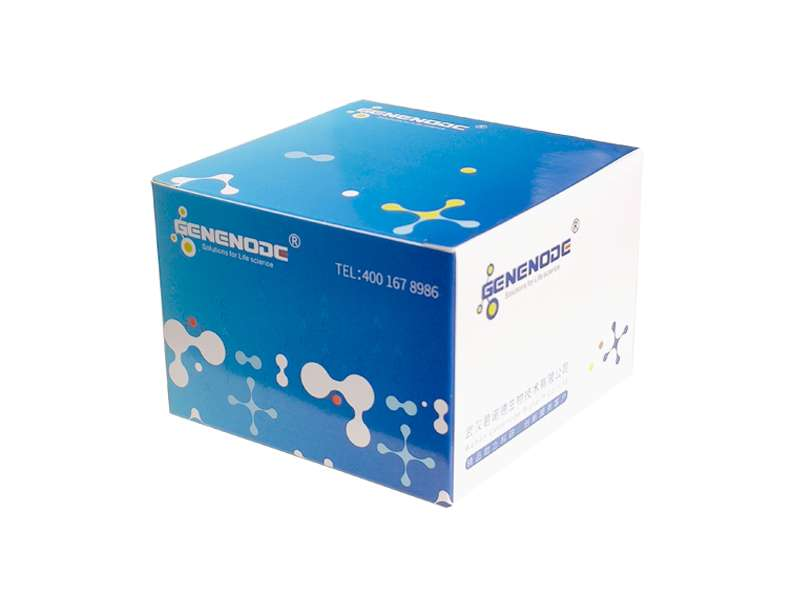
Fungus RNA Extraction Kit with gDNA Eraser(SpinColumn)
Packing Specification:
|
R2121-20
|
Fungus RNA Extraction Kit with gDNA Eraser(SpinColumn)
|
20T
|
CNY750
|
|
R2121-50
|
Fungus RNA Extraction Kit with gDNA Eraser(SpinColumn)
|
50T
|
CNY1360
|
|
R2121-200
|
Fungus RNA Extraction Kit with gDNA Eraser(SpinColumn)
|
200T
|
CNY4900
|
For research use only. Not for use in medicine, clinical diagnosis, food, cosmetics or other applications.
Product Introduction:
Based on silica column purification technology, fungal samples are homogenized and lysed in a lysis buffer containing high concentrations of guanidinium salt, releasing RNA into the lysis buffer. Due to the denaturants in the lysis buffer, endogenous or exogenous RNases are denatured and inactivated, protecting RNA from degradation. Insoluble impurities are removed from the lysis buffer by centrifugation. The resulting supernatant is filtered through a gDNA removal column to eliminate genomic DNA. Ethanol is added to the filtrate to adjust binding conditions, and the mixture is transferred to a spin column for filtration. RNA is adsorbed onto the membrane of the column, while proteins and impurities are not adsorbed and are removed. The column is washed with Deproteinization Buffer RW1 to remove proteins and other impurities, and with Wash Buffer RW to remove salts. Finally, RNA is eluted with RNase-free H2O.
Product Features:
1.The silica matrix membrane in the spin column is made of high-quality special adsorption membrane, with minimal differences in adsorption capacity between columns.
2.No toxic reagents such as phenol or chloroform are used, and no ethanol precipitation steps are required.
3.Fast and simple: Operation for a single sample can generally be completed within 25 minutes.
4.Genomic DNA removal column technology ensures effective elimination of gDNA residue. The obtained RNA does not require DNase digestion and can be directly used in PCR, quantitative real-time PCR, and other experiments.
5.Multiple column washing steps ensure high purity: The typical OD260/OD280 ratio ranges from 1.9 to 2.2 (The ratio of 100% pure RNA is generally around 2.2).
Experimental Procedures:
Notes
Before first use, add the indicated amount of absolute ethanol to the Wash Buffer RW bottle!
Transfer 1 mL of Lysis Buffer PLB to a centrifuge tube (if PLB has precipitated, dissolve it again in a 65°C water bath first). Add 5% β-mercaptoethanol to Lysis Buffer PLB (50 μL of β-mercaptoethanol per 1 mL of PLB). Invert to mix well and preheat in a 65°C water bath. Scale up proportionally for multiple samples.
1.Direct Grinding Method (Recommended for laboratories without liquid nitrogen or soft, easy-to-grind fungal samples)
a.Weigh 100-200 mg of fresh or frozen fungal tissue (100-150 mg for low-moisture samples), cut into small pieces quickly, and place into a mortar. Add 1 mL of PLB (with β-mercaptoethanol) and grind thoroughly into a homogenate at room temperature. Note: Grind quickly to ensure immediate and full contact between the tissue and Lysis Buffer PLB to inhibit RNase activity. β-mercaptoethanol is a key component of Lysis Buffer PLB; its final concentration can be increased to 10-20% if necessary. For particularly complex samples, PVP40 can be added to the lysis buffer to a final concentration of 2%.
b.Transfer the lysate to a centrifuge tube, vortex vigorously for 15 seconds immediately, place back in the 65°C water bath for a short time (5-10 minutes), and occasionally invert 1-2 times to assist lysis. Centrifuge at 13,000 rpm for 5-10 minutes to pellet undigested debris.
c.Transfer the lysate supernatant to a new centrifuge tube (more supernatant can be taken if it does not exceed the capacity of the genomic DNA removal column to increase yield). Add absolute ethanol equal to 0.5 volumes of the supernatant. Precipitation may occur at this time, but it will not affect the extraction process. Immediately pipette to mix well; do not centrifuge. If there is floating matter on the surface of the supernatant, use a pipette tip to move it aside and aspirate the liquid below.
d.Proceed directly to Step 3 of the experimental procedures.
2.Liquid Nitrogen Grinding Method (Widely applicable; recommended for extracting complex, hard-to-break, and easily degradable samples)
a.Grind fresh or -70°C frozen samples into fine powder in liquid nitrogen.
b.Transfer 100-200 mg of fine powder to the preheated Lysis Buffer PLB (with β-mercaptoethanol) centrifuge tube. Immediately vortex vigorously for 30-60 seconds or pipette to mix well for lysis until a satisfactory homogenate is obtained (or homogenize electrically for 30 seconds), which can shear DNA, reduce viscosity, and improve yield.
c.Place back in the 65°C water bath for a short time (5-10 minutes), occasionally inverting 1-2 times to assist lysis.
d.Centrifuge the lysate at 13,000 rpm for 10 minutes to pellet undigested debris.
e.Transfer the lysate supernatant to a new centrifuge tube (more supernatant can be taken if it does not exceed the capacity of the genomic DNA removal column to increase yield). Add absolute ethanol equal to 0.5 volumes of the supernatant. Precipitation may occur at this time, but it will not affect the extraction process. Immediately pipette to mix well; do not centrifuge. If there is floating matter on the surface of the supernatant, use a pipette tip to move it aside and aspirate the liquid below.
f.Proceed directly to Step 3 of the experimental procedures.
Experimental Procedures (Continued)
3.Transfer the mixed solution (less than 750 μL each time, can be added in two portions) to a genomic DNA removal column (place the column into a collection tube), centrifuge at 13,000 rpm for 1 minute, and discard the waste liquid. Ensure that all liquid has passed through the membrane after centrifugation with no residue left on the membrane. If necessary, increase the centrifugal force and time.
4.Place the genomic DNA removal column into a clean 2 mL centrifuge tube. Add 500 μL of Lysis Buffer RLT Plus to the genomic DNA removal column, centrifuge at 13,000 rpm for 30 seconds, and collect the filtrate (RNA is in the filtrate). Use a micropipette to accurately estimate the volume of the filtrate (usually approximately 450-500 μL; subtract the volume lost during filtration), add 0.5 volumes of absolute ethanol. Precipitation may occur at this time, but it will not affect the extraction process. Immediately pipette to mix well; do not centrifuge.
5.Immediately transfer the mixed solution (less than 750 μL each time, can be added in two portions) to a SpinRA column (place the spin column into a collection tube), centrifuge at 13,000 rpm for 1 minute, and discard the waste liquid. Ensure that all liquid has passed through the membrane after centrifugation with no residue left on the membrane. If necessary, increase the centrifugal force and time.
6.Add 700 μL of Deproteinization Buffer RW1, incubate at room temperature for 1 minute, centrifuge at 13,000 rpm for 30 seconds, and discard the waste liquid.
7.Add 500 μL of Wash Buffer RW (please check if absolute ethanol has been added first!), centrifuge at 13,000 rpm for 30 seconds, and discard the waste liquid.
8.Add another 500 μL of Wash Buffer RW (please check if absolute ethanol has been added first!), centrifuge at 13,000 rpm for 3 minutes to remove as much wash buffer as possible, avoiding residual ethanol in the wash buffer that may inhibit downstream reactions.
9.Carefully remove the SpinRA column (do not let the SpinRA column touch the waste liquid in the collection tube), place it into a new RNase-free centrifuge tube. According to the expected RNA yield, add 30-50 μL of RNase-free water to the center of the adsorption membrane (heating the water in a 70-90°C water bath can improve yield), incubate at room temperature for 1 minute, and centrifuge at 12,000 rpm for 1 minute.
If the expected RNA yield is >30 μg, add 30-50 μL of RNase-free water and repeat Step 9, then combine the two eluates. Alternatively, add the first eluate back to the spin column and repeat Step 9 for higher RNA concentration. Repeating the elution once results in a high-concentration RNA eluate. Combining two separate eluates increases the RNA yield by 15–30% compared to a single elution, but the concentration is lower. Users can choose according to their needs.